Posts mit dem Label HSF '14 werden angezeigt. Alle Posts anzeigen

Donnerstag, 25. Dezember 2014

My favourites from the HSF '14 - part one

This year, I only finished 2 items of the Historical Sew Fortnightly '14 in time (#1 and #9), and a third one too late (#2). I guess the 2-weeks timeframe was too tight for me, and besides that I also had a rather stressful year and not nearly enough time for sewing.

However, I followed the progress of the other participants closely via the facebook group, and since acknowledging the work of others is essential to make a group stronger and more connected (which is one of the goals of the HSF challenges), I decided to make a list of my own favourites of the past year.

Challenge #1 - Make Do and Mend


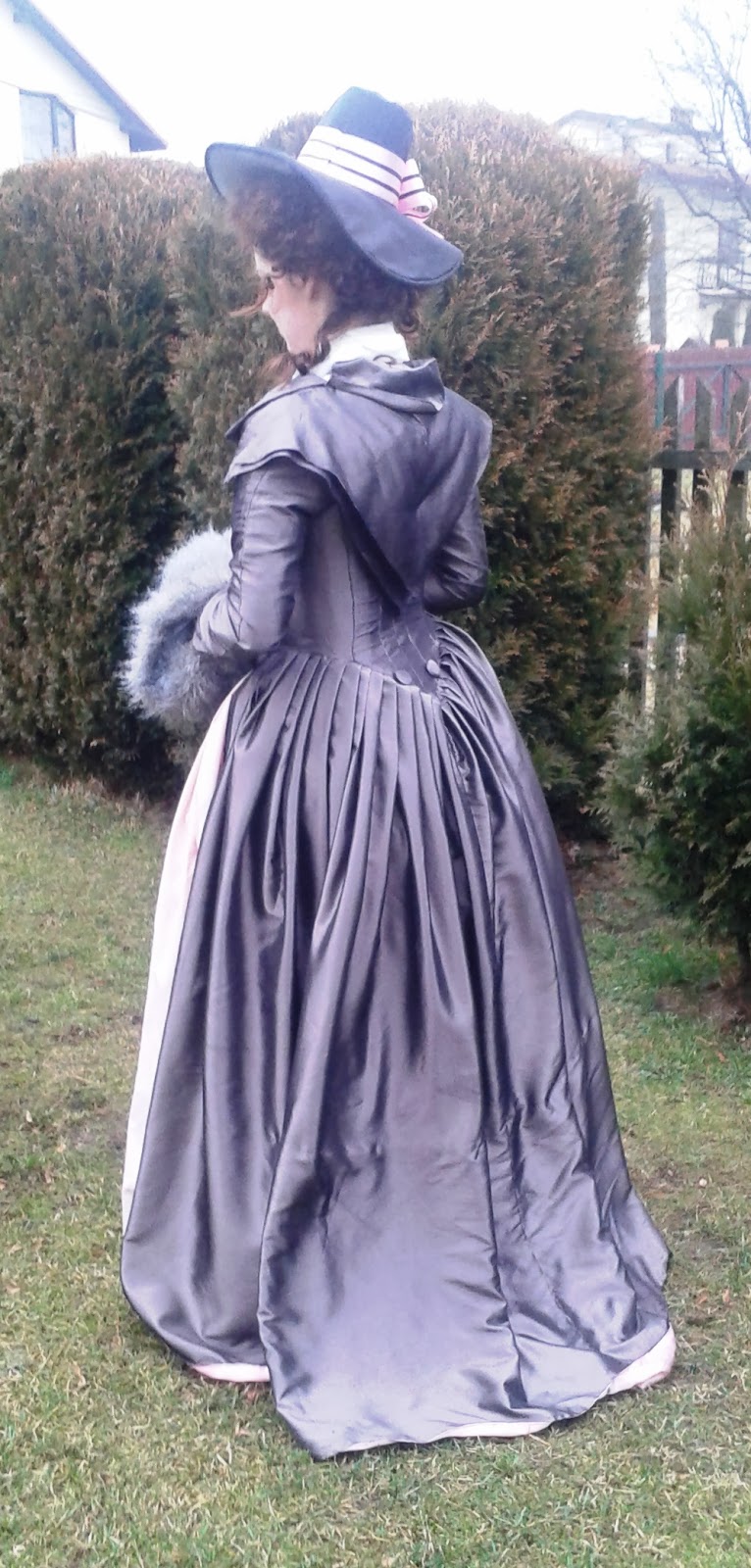
I totally fell in love with Ela's wonderful redingote in dark grey poly silk (which seems to be of superb quality because it looks like real silk), matching hat and muff. They needed some mending and she also newly decorated the hat. I just adore the color combination of light pink for the skirt and dark grey for the redingote. I love everything about this outfit.

Doesn't she look regal?
I can never decide if redingotes look the best from the front or from the back.

Challenge #2 - Innovation

For the Innovation challenge, Carol did the most amazing thing: she crocheted a 1920s evening cape with a Tutanchamun-inspired design. Unfortunately, she didn't give a link to a blog post, so I'll just share what she writes about it on facebook:

HSF 2014 #2 Innovation
Luster Sheen Acrylic Yarn
November 1922 Howard Carter and Lord Carnarvon discovered the riches of Tutankhamen's tomb. Images of the treasures inspired the worlds of fashion and design: TUTMANIA of the mid-1920's.
I decided to crochet an evening cape with a Tut-inspired design. No pattern, I started at the neckline and let the garment grow, paying close attention to the amount of yarn I had in my stash.
Notions: Took an Egyptian-inspired costume necklace and used the 28-turquoise beads on each of the 28-points at the bottom of the garment. Not planned, it just worked out that way.
Only accurate in theme, not materials. Have worked on it almost every night of January so far - just finished and photographed this evening.
No cost - all stash - and I used every last bit of this yarn that I had!

What a creative idea!
She even added a scarab beetle pendant as a brooch!

Challenge #3 - Pink


For this challenge, Gina made a lovely 1912 ensemble from dusty pink faux dupioni silk. She based it on a 1912 fashion plate and added an antique chemisette and a wonderful hat to complete the outfit.

The colour of the dress is to-die-for! 
The antique lace chemisette goes perfectly with the dress! 


Challenge #4 - Under It All


There were a lot of possible favourites in this challenge. I eventually chose Andrea's completely hand-sewn 14th century bathing shift as my personal winner, because it is a rather unusual garment and you don't see it every day in your costume blogs. She cleverly made the shift out of unbleached linen, as white becomes transparent when wet.

Simple, but very pretty. It could even pass as a modern summer dress! 
One of the illustriations that inspired Andrea's garment


Challenge #5 - Bodice


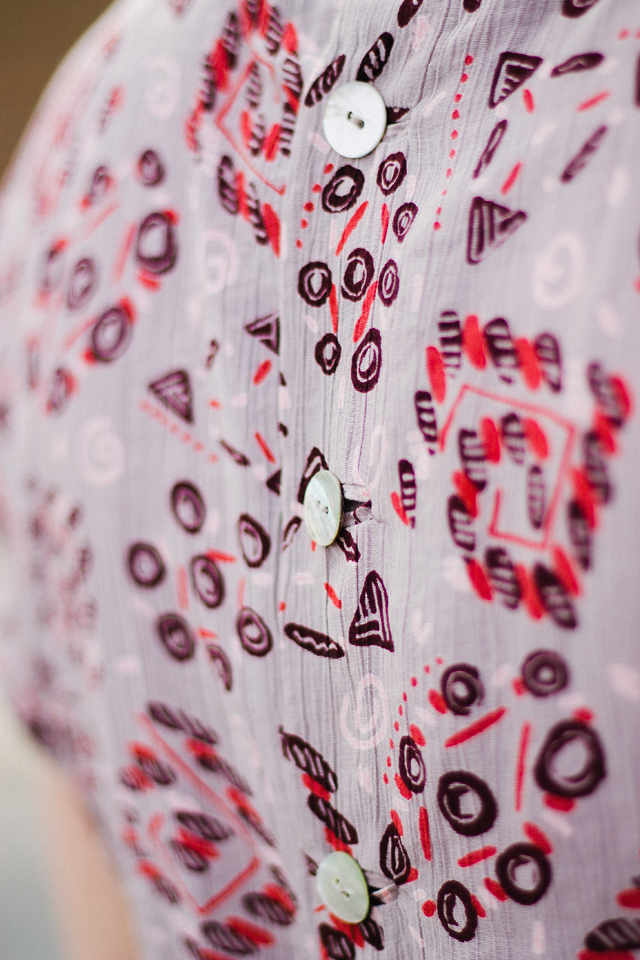
Brigid made a 1940s blouse out of crinkled rayon fabric that is printed with an original 1940s pattern. It seems the fabric has been made exactly for this kind of blouse. I think Brigid also made the perfect choice in pairing it with the red skirt and the red shoes. The whole outfit looks so alive and vibrant. I love it. :)

I like the oversized shoulders! 
Detail of the back


Challenge #6 - Fairytale


For the fairytale challenge, my personal favourite has to be Ségolène's Mucha-inspired corset based on postcards and pictures of fairies and nymphs in the edwardian era. The colours are gorgeous, and she put a lot of work in it adding all the precious little flowers.

These colours... <3
Combining Mucha and edwardian depictions of fairies, I think Ségolène nailed this challenge! 


Challenge #7 - Tops and Toes


There are so many awesomes costumers all around the world, and the main reason the HSF is such a great invention is that it brings them all together. How else would I ever had the chance to learn about Marna, who made her own late 19th/early 20th century style tango boots! Boots! Late 19th/early 20th century! Made her own! And she's not even a professional shoemaker, but the result sure looks like she was one.

Can you believe it? How gorgeous are these boots!
She documented the whole process in pictures. 


Challenge #8 - UFOs and PHDs

Quoting Leimomi, "In sewing parlance, a UFO is an Un-Finished Project, and a PHD is a Project Half Done.". So this challenge was all about finishing something that has been started and then neglected for too long.
For this challenge, Ophelia finished the skirts and hat for her beautiful 1880s gown that she started a few months before and then didn't continue due to lack of motivation. Luckily, this challenge came along just right in time and finally gave her the perfect excuse to finish the outfit.

I love the combination of the two fabrics that Ophelia used for this gown.
This picture! *swoon* Looks like it was right out of a period movie! 


Challenge #9 - Black and White

My favourite from this challenge is Jeanette's lovely black 1880s Victorian corset with white details, made of coutil and silk dupioni. She writes that initially she was a bit afraid of making her own corset, but then found and signed up for an online corsetmaking class which gave her the assistance she needed to finally try making a corset. And look how wonderful her corset turned out eventually!

I like the unobtrusive yet eye-catching trim.
Impeccable!

Challenge #10 - Art


For the tenth challenge, participants were supposed to draw inspiration from a work of art. This time, the challengers produced an extraordinarily large number of awesome garments, but my favourite was Ette's adorable dancing costume based on a picture of a ballet dancer by Pierre Carrier-Belleuse.


Ette writes that she isn't even a dancer. I think she should start right away, don't you think? :) 
Bodice detail

Challenge #11 - The politics of fashion

When Leimomi first announced this challenge, I thought it was a rather tricky one! Still, as always the challengers came up with a lot of smart ideas. Annette did an especially clever interpretation of the politics-theme. She made a cute skirt for her 1920s swimsuit, as there actually used to be laws on some beaches about how much leg you were allowed to expose!

The colour looks lovely on Annette! 
An officer measuring the amount of exposed leg - let's hope for the young lady she was within limits! ;)

Challenge #12 - Shape and support


For the twelfth challenge, Britta made an impressively gorgeous pair of 1740s-1760s stays. She stitched all of the numerous boning channels by hand and used real leather for the binding. Great work!

This is a pair of impeccably made stays. 
Super accurate stitching! 


Sonntag, 18. Mai 2014

Robe de style: some construction details

I still have to get myself used to taking pictures during construction. I only have a few in-progress-pictures, but I took some of the details of the finished dress.

For the pattern, at first I tried to adapt some of the freely available ones (to be exact, this one and this one) but couldn't quite figure out how to get rid of the darts. So I made my own pattern. Usually I try to avoid this, but it turned out fine. After weeks of fiddling with the muslin I came up with this:


I also had a pattern piece for the little triangle that belongs in the neckline, but it went missing.
I uploaded the pattern in maximum size, so if you'd like to use it just click the picture and a large version should appear. The cutting mat has an inch grid.


This is the dress on my dress form. I only included these pictures for the sake of completeness, it really looks a lot nicer when on a person.


The fastening. I totally copied this from Katherine from The Fashionable Past. She mentioned that the snaps tend to come undone, so I added some hooks and eyes. However, my snaps still came undone, but I blame the cheap snaps I used. I will eventually change them to black ones anyway, and make sure they are top quality.


Detail of the neckline inset and the sari border. There are small pencil marks on the outside of the inset, because I sewed it in the wrong way around and then was in too much of a hurry to change it. Whoops. :P


The dress inside out. This picture illustrates quite well how I assembled the whole thing. I cut the bodice pieces from dress fabric and lining fabric, basted them together, then finished the edges with facings. Then I sewed in the neckline triangle by hand, and then sewed on the trim, also by hand. The stitches of the trim show on the inside, which I could have avoided but I had to do it quickly. Well. I don't mind that much, there are so many extant dresses around that look terrible on the inside. I will just classify it as period. :)
After I finished the bodice, I attached the ruffled skirt. I sewed it only to the dress fabric of the bodice, and then folded the lining over the seam and sewed it down with whipstitches.
By the way, I used four widths of fabric for the skirt. My fabric was 110cm wide.
After the skirt was done,  I added the pocket hoops. I sewed them only on the seam allowances of the skirt seam, so the stitches don't show outside.


Different views of the pocket hoops. They could probably be a bit bigger. They only make a subtle difference, but I guess that's enough. In case you are planning a robe de style and brooding over the size of the hoops as I did: I made mine exactly after the pocket hoops in Corsets & Crinolines by Nora Waugh, but only half wide. The length is the same as in the book.


I tried to take detailed pictures of the embroidered trim, but I obviously lack the necessary photographing skills. I hope you can at least make out some details. There is bullion embroidery on it, which I love. It makes it look antique and precious, doesn't it?


Samstag, 17. Mai 2014

A Robe de Style inspired by Jeanne Lanvin (HSF '14 Challenge #2: Innovation)

After months of contemplating and cluelessly staring at the muslin I finally finished my robe de style in three days of frantic sewing, because I wanted to wear it to a special event. Of course I already knew about the event when I started the dress in November last year (!), but you know how these things go.
However, I learned that the simplest solutions are often the best, and that it would have been really smart to make the muslin out of a fabric that has a similar stand as the dress fabric. I tried numerous variations of the bodice with the muslin and wasn't satisfied with any of them, until I was forced to make a decision because my time was running out.
So I chose the easiest version. No hidden darts or any other gimmicks, no special seam placement, just a more or less fitted front and back piece that somehow resembled my inspiration dress. In the end the simple pattern turned out to work perfectly with the silk I was using, and I am very happy with the outcome.


Here you can see the inevitable fitted-but-without-darts-puckering in the back. I hated it on the muslin, but it looks a lot better with the dress fabric. I like the diamond shape :)


Yes, I should have used black snap fasteners. ;)

Where is my second foot? o.O


I like my neighbours garden gate. :)


Originally, back in November '13 when I started to work on this dress, I planned to finish it for the HSF '14 Challenge #2: Innovation. That didn't work out, but I like the HSF "fact sheet" so I'm including it here:

The Challenge: Innovation

Fabric: 4,50m black Shantung silk for the dress, a piece of cream colored silk taffeta for the neckline, fine light pink silk twill for the bodice lining

Pattern: my own

Year: 1926

Notions: black thread, hooks and eyes, snap fasteners, embroidered vintage sari border

How I historically accurate is it? Good question. I'm not sure if I already know enough about the 1920s to evaluate it correctly. I think the pattern is fairly correct. There are no darts in the bodice, and I have seen similar puckering in the back of extant pieces. The silk fabric is probably correct, although it maybe should have been silk taffeta instead of shantung. I finished the neckline and armholes with facings, no idea if that was done in the 1920s. Also no idea if anyone used vintage sari borders to embellish a dress then. The dress closes with a combination of hooks/eyes and snap fasteners, which I have seen on several extant dresses. All invisible seams are done by machine, the visible ones are done by hand (which is never wrong, I guess)
In my opinion, the overall look is coherent with the 1920s, the materials are more or less accurate, and the only thing I'm not really sure about is the general construction and the facings. I give it 70 %.

Hours to complete: ~ 35, including the patternmaking and the muslin

First worn: Boheme Sauvage Vienne, April 26th 2014

Total cost: The fabric came from stash, but I vaguely recall that I paid € 10/m, so € 45 for the black silk. I don't remember the price of the other two silks, but let's just round it up to € 50 for the whole fabric. The sari border was € 12, the fastening materials and thread came from stash. So in total I paid around € 65 for the whole dress.

By the way, Laurie from Teacups Among The Fabric had the same idea for Challenge #2, and she did get it done. I like her dress very much, especially that it is shorter in front and has a differently coloured visible lining. Also, the light pink she used is lovely on her and emphasizes the playful nature of this type of dress.

Freitag, 16. Mai 2014

HSF '14 Challenge #9: Black and White

I finally completed another challenge!
It was an easy one - create something that is either black or white, or black and white. Click here for a detailed challenge description.

I chose to make a basic black 18th century petticoat, which is going to be part of a black fantasy 18th century outfit. The project would have been ideal for Challenge #6: Fairytale (there's always an evil fairy), but as I have to admit that the HSF is going waaaay to fast for me I'm now aiming to finish the rest for  Challenge #21: Re-Do, which is due in November.

The facts:

What the item is: a black 18th century petticoat

The Challenge: Black and White

Fabric: black polyester jacquard, I think it is actually upholstery fabric

Pattern: http://www.marquise.de/en/1700/howto/frauen/rock.shtml

Year: 1780s-ish

Notions: thread, cotton tape

How historically accurate is it? Fabric: 0% (poly), Construction: 0% (machine sewn), Pattern: 100%, so I give it around 30%

Hours to complete: getting the pleats right took me ages, so I think about 6 hours

First worn: not yet

Total cost: all of the materials came from stash (yay!) so I don't know exactly, but I think the fabric cost me around €10


The pictures: 


Front view

Side view. I have no idea why the shape of the bum pad looks funny in this picture. It looks fine when I'm wearing it.


Back view. I like the pleats.


Did I mention I like the pleats? They turned out quite even, which makes up for the messy waistband. :P